
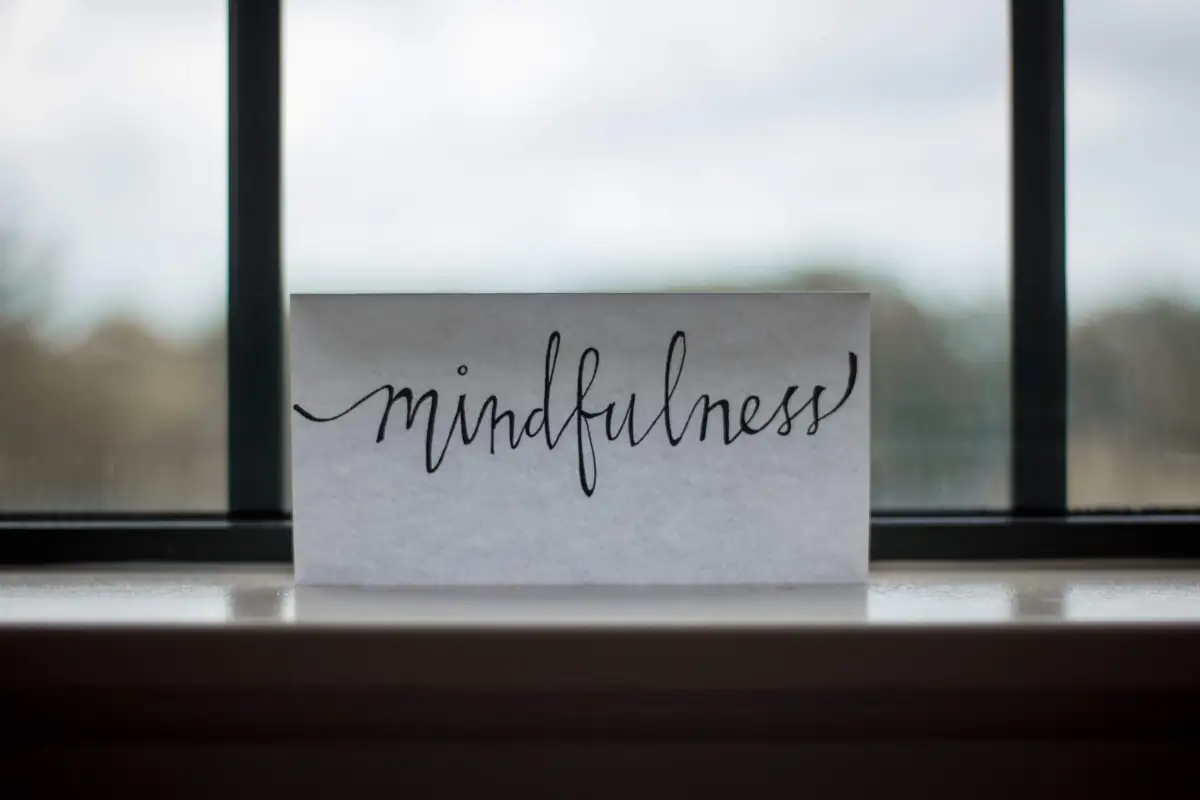
Mindfulness can sometimes feel like an experience somewhere between wrestling a crocodile and lying in a field of long grass on a sunny day. On some days, bringing our attention to the present can feel peaceful and grounding. On others, asking our mind to stay in one place for more than a few seconds can feel almost impossible.
Perhaps that’s partly because mindfulness is sometimes presented as being about clearing your mind, stopping your thoughts or becoming completely calm. It doesn’t really have to be any of those things.
So, What Is Mindfulness?
At its simplest, mindfulness is about noticing what is happening in the present moment. That might mean noticing our thoughts, feelings or bodily sensations, or paying attention to something happening in the world around us, without immediately needing to change or make sense of it.
If you try to focus on your breathing and within seconds you’re thinking about what to cook for dinner, an email you haven’t answered, something embarrassing you said years ago and whether you’ve remembered to put the washing on, you haven’t failed at mindfulness. You’ve simply noticed that your attention has wandered.
That noticing is part of the practice.
The “Monkey Mind”
I came across the expression “monkey mind” years ago and loved it as a way of describing what can happen when we try to focus our attention. Just as we settle on one thing, our mind leaps somewhere else, and then somewhere else again.
It can be tempting to become frustrated with ourselves: Why can’t I concentrate? Why am I thinking about this again? I’m terrible at mindfulness. But becoming angry with ourselves for having thoughts rather defeats the point. Our minds think; that’s what they do. Mindfulness can be less about wrestling our thoughts into submission and more about noticing where our attention has wandered and, if we want to, gently bringing it back.
Sometimes we might do that many times in the space of a few minutes. That’s okay too.
Mindfulness Doesn’t Have to Mean Meditation
Formal meditation is one way of practising mindfulness, but it isn’t the only way. We can bring attention to drinking a cup of tea, walking the dog, having a shower, listening to music, cooking, gardening or sitting outside. We might notice the temperature of the air, the feeling of our feet against the ground, a sound in the distance or the sensation of warm water on our hands.
It doesn’t have to take half an hour either. Sometimes mindfulness might simply be a few moments of noticing: What is happening for me right now?
For people who find sitting still and concentrating on their breathing frustrating, uncomfortable or simply incredibly boring, it can be helpful to know that becoming present doesn’t have to look like sitting silently with your eyes closed.
Mindfulness Might Not Look Like Sitting Still
For some people, including some neurodivergent people, movement, repetition or becoming absorbed in an activity can feel much more regulating than stillness. Walking, knitting, drawing, gardening, rocking, swimming or repeating a familiar physical activity can provide rhythm and sensory feedback, helping attention to settle and sometimes creating a stronger sense of connection with ourselves and what we are doing.
Research with autistic people has increasingly recognised that repetitive movement can have important roles in sensory and emotional regulation, attention and wellbeing. Deeply absorbing activities and experiences of flow may also be valuable for some neurodivergent people.
These experiences aren’t necessarily the same as mindfulness. Becoming deeply absorbed in something can sometimes mean that we lose awareness of time, our surroundings or other needs. But they do remind us that being present doesn’t have to mean being still.
It can be useful to approach mindfulness with curiosity and a little trial and error. You might discover that focusing on your breathing works really well for you, or that it makes you more uncomfortable. Perhaps walking helps but sitting still doesn’t. Maybe repetitive movement settles your mind, while somebody else finds music, cooking or being outside more helpful.
There doesn’t have to be one correct way. The important thing is noticing what happens for you and giving yourself permission to adapt, stop or try something different.
When Mindfulness Doesn’t Feel Calming
Mindfulness isn’t necessarily relaxing, and it isn’t right for everybody in every moment. Sometimes turning our attention towards our body, thoughts or feelings can bring us closer to experiences that feel uncomfortable or overwhelming.
If focusing on your breathing or closing your eyes makes you feel worse, you don’t have to keep doing it. You might find it easier to keep your eyes open and notice something outside yourself instead: colours in the room, sounds around you, the feeling of your feet on the floor or an object you’re holding. Or mindfulness may simply not be what you need at that particular time.
There is useful information in discovering that something doesn’t work for you. “I don’t like this” or “this isn’t helping” can be part of the trial and error too.
Finding Your Own Way
Perhaps mindfulness doesn’t need to become another thing we have to remember to do properly. It can be an invitation to occasionally notice where we are, what we’re experiencing and what our attention is doing.
Sometimes that might feel peaceful. Sometimes our mind will wander off in six different directions before we’ve finished one breath. Sometimes the thing that helps us reconnect with the present won’t look much like traditional mindfulness at all.
The aim doesn’t have to be becoming perfectly calm or learning to control our thoughts. We can be curious about what helps, notice what doesn’t and gradually discover what feels right for us.
Sometimes finding our way back to ourselves might involve stillness. Sometimes it might involve movement.
Cover image courtesy of Lesly Juarez.